

J-Plasma vs Morpheus8: Which Skin Tightening Procedure Is Right for You?

Key Takeaways
- Both J-Plasma and Morpheus8 employ cutting-edge energy-based technologies to tighten the skin. They focus on different skin layers and provide distinct advantages for different concerns.
- Plasma energy treatments provide targeted, minimally invasive ways to tighten and refresh skin, ideal for various skin types and regions.
- Radiofrequency microneedling, as found in Morpheus8, merges the microneedles of traditional microneedling with radiofrequency energy to penetrate deeper tissue for treating texture issues and skin laxity.
- The invasiveness, recovery time and possible risks vary greatly between the two treatments, so knowing these details assists in an educated decision.
- Perfect candidates for each procedure vary based on factors such as skin type, age, desired outcomes, and treatment locations. This emphasizes the significance of comprehensive skin evaluation.
- Selecting a skilled and experienced provider is essential. Patients should inquire about their credentials and prior results to ensure safety and effectiveness.
J-plasma and Morpheus8 are two popular skin tightening treatments that use different methods to firm and smooth skin. Both combat loose skin and fine lines on the face and body.
Each can fit different skin types and treatment requirements. To assist you in determining which is the right fit for you, the body of this article will discuss how these two compare in terms of safety, results, and downtime.
The Technologies
J-Plasma and Morpheus8 utilize different approaches to skin tightening and enhancing skin health. Both recently introduced big changes in the world of non-surgical skin treatments. What separated them were their own special working mechanisms, penetration depth and impact on various skin types. Knowing these details assists users in making informed decisions on what each device is capable of.
Plasma Energy
| Benefit | Description |
|---|---|
| Precision | Targets wrinkles, sagging, and fine lines with high accuracy |
| Versatility | Works well on all skin types, including melanin-rich skin |
| Safety | No risk of burns or post-inflammatory hyperpigmentation (PIH) |
| Healing Support | Calms breakouts, supports acne scar healing, antibacterial and anti-inflammatory |
| Minimal Downtime | Redness subsides quickly, little to no flaking, fast recovery |
| Visible Results | Improvements seen after one session, optimal effects over 3–6 sessions |
Plasma energy, like Jet Plasma, works at a cellular level using cold atmospheric plasma. This method does not rely on heat or induced injury. What it delivers best is accuracy. Plasma pens are able to treat sensitive areas such as around the eyes or mouth without much risk of burns or scarring.
For closing vein targets, it treats wrinkles and sagging skin gently. Jet Plasma’s versatility is what sets it apart. It is effective on all skin types and conditions, such as active acne, hyperpigmentation, and scarring.
Its antibacterial and anti-inflammatory effects help calm breakouts, which makes it great for acne-prone skin. The treatment is non-invasive and benefits from a fast recovery, with numerous patients being able to resume their normal activities within a day.
Another is safety for all skin tones. Jet Plasma sidesteps the risk of PIH, a frequent worry with energy-based devices for deeper skin tones.
Radiofrequency Microneedling
- Morpheus8 pairs fine microneedles and RF energy to transform the skin.
- The device achieves treatment depths of up to 8 mm, which is deeper than other RF microneedling devices.
- The process stimulates collagen and elastin and can assist with surface texture, laxity, and even acne scarring.
- Morpheus8 has been shown to be effective for the face, neck, and body, treating both shallow and deep concerns.
RF microneedling’s fusion of microneedles and energy allows it to access deeper layers of the skin. This signifies it can be effective for sagging skin, deep wrinkles, and uneven tone. The deep penetration is key for thicker areas like the jawline or cheeks.
Morpheus8 treatments do have risks. Some people may experience redness, swelling, or flaking for one to three days. In infrequent instances, facial fat loss can occur, particularly under the eyes or on the cheeks.
The danger increases if the tool is applied too forcefully or without professional attention. Caution with RF microneedling for darker skin is advised. If applied incorrectly, it can trigger PIH.
In the hands of skilled providers, it’s still a powerful choice for many, providing versatility to address everything from fine lines to texture to laxity, all in a variety of skin types.
A Direct Comparison
J-plasma vs Morpheus8: A Direct Comparison J-plasma and Morpheus8 are two advanced skin tightening treatments. Each employs a different approach and provides different advantages. Let’s compare them to see which might suit different skin concerns and recovery needs.
1. Mechanism
J-plasma utilizes cold plasma energy. This is done by ionizing helium gas to produce a focused stream. The plasma contracts the tissue below the skin which causes an immediate tightening effect. Because it’s cool, it does less heat damage than lasers.
Morpheus8 combines microneedling with radiofrequency (RF). Tiny needles penetrate deeply into the skin, including the dermis and subdermal layers. RF energy warms the tissue via these channels, leading to collagen contraction and encouraging collagen proliferation over time.
This double duty addresses both surface and deeper skin problems. They both stimulate collagen. J-plasma’s plasma energy does this by making controlled injury under the skin, whereas Morpheus8 does it via heat and micro-wounds.
J-plasma results in rapid skin tightening with continued improvement. Morpheus8 is more gradual, with skin quality continuing to improve for months following treatment.
2. Invasiveness
J-plasma is more invasive, requiring small incisions for the plasma apparatus to get under the skin. This can cause discomfort, swelling, and bruising for a few weeks.
Morpheus8 is noninvasive. It utilizes tiny needles that puncture the skin and don’t require incisions. Most people experience mild discomfort and a hot or prickly sensation.
In other words, more invasive treatments such as J-plasma come with potential downsides like delayed healing, infection, or scarring. Morpheus8’s risks are generally minor and temporary.
If you’re looking for less downtime and something a little gentler, Morpheus8 might be more your speed. Others might opt for hardcore results regardless of increased downtime.
3. Target Areas
J-plasma can be used on the face, neck, arms and even the abdomen. It’s frequently used for folks looking for a non-surgical lift on bigger or looser stretches.
Morpheus8 works wonders on smaller, sensitive areas. It is safe for eyelids, jowls, and around the mouth. Both treatments are customizable.
J-plasma can be applied on thick or sagging skin, whereas Morpheus8 can adjust needle depth and energy suitable for thin or sensitive skin. Doctors can often assist in selecting the appropriate approach according to the area and the issue, such as deep wrinkles or mild laxity.
4. Results
J-plasma provides rapid skin tightening, sagging reduction and wrinkle reduction immediately. Other treatments get stronger over weeks as the skin heals.
As a direct comparison, Morpheus8 enhances skin texture, firmness, and elasticity. Results accumulate gradually, with optimal transformation occurring after several months.
J-plasma results can persist for a year or longer, while Morpheus8 might require repeat treatments to maintain the benefits. Patient reviews indicate strong satisfaction with both.
Some favor the instant transformation from J-plasma and others enjoy the gradual, natural shift Morpheus8 provides.
5. Downtime
The J-plasma downtime can be 1 to 3 weeks, with swelling, redness, and bruising. It requires more care afterwards, like staying out of the sun and heavy exercise.
Morpheus8 typically has under a week of redness or slight swelling. Skin might be slightly coarse for a couple of days. Less downtime sounds more attractive to busy people.
This can help when selecting a treatment. To heal quicker, it’s helpful to keep the skin clean, apply gentle moisturizers, and avoid makeup or harsh products.
Ideal Candidates
Skin tightening treatments such as J-Plasma and Morpheus8 are most effective for individuals who need to address loose or sagging skin. These treatments are typically for individuals who observe shifts in skin elasticity, perceive an increase in wrinkles, or desire to even out coarse skin.
J-Plasma utilizes cold plasma energy to transform the skin’s appearance by tightening and smoothing it. It is an excellent option for those with mild to moderate skin laxity and can be effective on various areas such as the face, neck, or body. While 35 to 65 year-olds frequently request J-Plasma, age is just one component.
Skin type is important. Individuals with lighter to medium skin tones generally experience more even outcomes. However, J-Plasma can be applied across various skin types provided the skin is in good condition. J-Plasma can assist individuals who haven’t seen results with creams or want to address deeper wrinkles or mild scars.
For anyone with sun-damaged skin or stretch marks that resist fading with regular care, this treatment goes a long way toward helping. J-Plasma is great for folks who are not seeking surgery and want less downtime.
Morpheus8 is yet another skin tightening treatment that combines microneedling with radiofrequency energy. This makes it a good fit for individuals with lines, wrinkles, and uneven skin texture. It’s effective for people with mild to moderate skin laxity, particularly in the lower face, jawline, or neck.
Morpheus8 can assist with acne scars and stretch marks, making it a choice for individuals seeking both tightening and textural enhancement. Safe for most skin tones and low risk of hyperpigmentation, it is for all global skin types. Morpheus8 is often selected by individuals seeking a minimally invasive treatment with rapid recovery.
It is great for people who tried peels, lasers, or creams in the past but didn’t get the results they hoped for. A comprehensive skin evaluation is essential when selecting the best treatment. A skin care provider will consider the skin’s thickness, tone, and trouble spots.
They will inquire about health history to screen for conditions that may prevent you from receiving these treatments. Crucially, this action helps ensure the decision is secure and will result in positive outcomes. Individuals with stable health and no serious skin issues make good candidates for both J-Plasma and Morpheus8.
Personal goals factor into the decision. If you want to repair deep wrinkles, scars or large areas, J-Plasma may provide more transformation. If you are aiming for smoother skin and less downtime, Morpheus8 is a better match.
The top candidates are those who have genuine expectations, know how the process operates and what they can expect to get out of it.
The Treatment Experience
Both the J-Plasma and Morpheus8 skin tightening treatments begin with the guidance of a clear plan by an experienced provider. Prior to the treatment, the skin is cleansed and occasionally steamed. This helps soften the skin and opens pores. It makes the products work even better and provides a quick opportunity for patients to chill out.
For J-Plasma, the doctor can dot the areas to treat, then numbs the skin with a local anesthetic. Morpheus8 employs numbing cream to reduce discomfort. In both instances, the goal is to simplify the experience.
In a J-Plasma session, the provider runs a small device slightly above your skin. That’s what this device does; it uses cold plasma energy to tighten tissue. While the majority of patients report feeling warmth or tingling, pain tends to be low. Treatment usually takes a single session that lasts 30 to 60 minutes in duration, but time is contingent on area size.
Post-treatment, there might be some redness, swelling, or a bronze appearance for 5 to 7 days. Light peeling sometimes begins as early as day four and is perfectly normal as the skin heals and renews. Aftercare is easy but critical. For the treatment experience, patients are advised to keep their skin clean, use gentle products, and avoid sun exposure until their skin is healed.
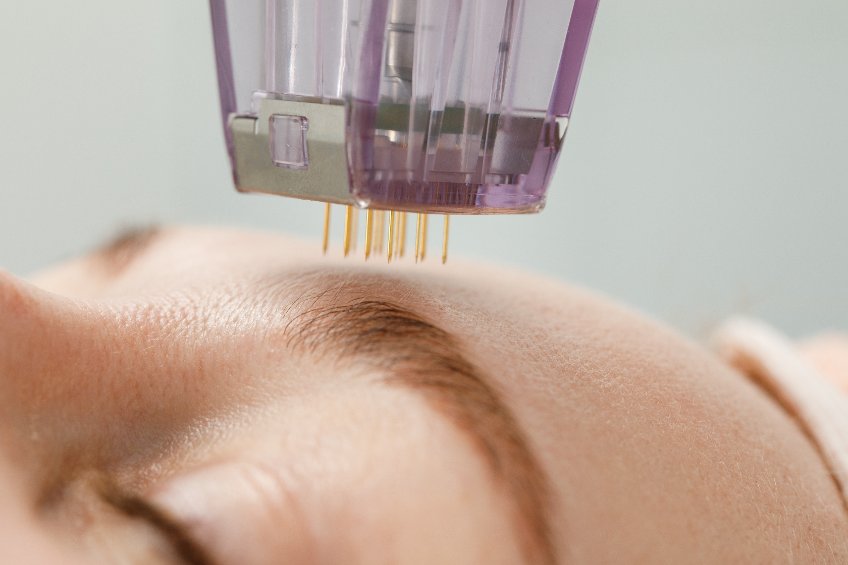
Morpheus8 utilizes a handpiece with fine needles that transmit radiofrequency energy into the skin. These needles create micro-channels and the radiofrequency heat helps with tissue tightening and renewal. The numbing cream they put on beforehand helps deaden the pinch of the needles, so most people report that it just feels like light pressure or warmth.
A session can last 30 to 90 minutes, and occasionally a course of treatments, typically 2 to 3 weeks apart, is required for optimal effect. Post-treatment, patients can experience redness, mild swelling or bronzing for 2 to 7 days depending on the intensity of the settings. There could be some light peeling as the skin recovers.
Aftercare is near J-Plasma, including mild cleansing, great sun protection and no aggressive products for a week. Patient response to either treatment is said to be mild discomfort at worst, with great results. J-Plasma might require a single treatment but others opt for multiple to amplify the results.
Morpheus8 typically requires a few treatments, but the downtime is equivalent for both and is generally less than a week. The effect of each appears in roughly a week and continues to improve for as long as six months. The expertise of your practitioner and a serene, hygienic environment are crucial for your peace of mind and the result.
A compassionate provider will assist with aftercare and answer questions, making the entire experience easier and more comforting.
Practitioner Skill
Practitioner skill is a key determinant of the efficacy of skin tightening treatments such as j-plasma and Morpheus8. These treatments aren’t the tools or the machines; the person behind it counts heavily. A practitioner’s background, experience, and approach can make a big difference to the skin post procedure.
The outcomes with both j-plasma and Morpheus8 are highly dependent on the skill of the practitioner. A practitioner who’s performed thousands of treatments and trained in both techniques will understand how to customize the settings for each client’s skin type, age, and individual needs.
Take j-plasma, for instance, where the margin for error is pretty thin. It employs cold plasma energy beneath the skin. If a practitioner is not skilled, they may use too much power or fail to move the device in the optimal manner, which can result in uneven tightening or even burns and scarring.
Morpheus8 requires the same skill, using minuscule needles and radiofrequency energy. If the depth or settings are not matched to the client’s needs, the treatment could either work poorly or cause side effects like swelling, bruising, or pigmentation changes.
Training and continued learning are huge. Practitioners who stay abreast of new techniques and technological changes are more likely to achieve favorable outcomes and reduce the risk of complications. For instance, a practitioner who attends workshops and studies with other masters can glean novel means to make the procedures safer or more comfortable.
This appetite to continue learning allows them to identify hazards early and pivot rapidly if they notice something isn’t working during a session. The granularity a practitioner brings to the work counts. A technician who is careful, inspects the skin before every session and listens to what the client wants usually achieves superior results.
For instance, a practitioner who discusses their client’s objectives and historical health concerns can tailor the treatment plan to those needs, resulting in greater satisfaction. Clients should always inquire about a provider’s training, how many times they’ve performed these treatments, and if they can provide before-and-afters of previous clients.
This goes a long way toward ensuring the practitioner is capable and reliable to perform the work safely.
Making Your Choice
When deciding between J-Plasma and Morpheus8 for skin tightening, you’re essentially balancing your personal requirements against what each procedure can provide. Both have their merits. Your skin, objectives, downtime comfort, and budget all factor in. They both smooth wrinkles and tighten skin. One approach doesn’t fit all.
Skin type is crucial. Certain options, such as J-Plasma, tend to be tailored for lighter skin tones as darker skin runs the risk of hyperpigmentation. Morpheus8, a microneedling with radiofrequency device, tends to be more flexible across a broader spectrum of skin tones and still requires caution for those with deeper shades. For instance, those with olive or dark complexions should inquire about the possibility of pigmentation shifts post-treatment.
Your primary objectives count as well. If you’re looking for a major shift in skin texture or want to address deep lines, J-Plasma’s approach with plasma energy can work well, but it’s more invasive and includes more downtime. Expect redness, swelling, or crusting for up to a week.
Morpheus8 is less invasive, though you may require multiple sessions spaced approximately a month apart to achieve the same level of transformation. If you’re into natural results, less risk, and recovery, Morpheus8 might be more your speed. If you can handle more downtime for more dramatic results, J-Plasma may be your ticket.
Cost is another huge consideration. J-Plasma is usually more expensive per visit, but you might need less of them. Morpheus8 tends to be less expensive per session, but since you might require multiple appointments, the total expense can accumulate.
J-Plasma results can last for up to three years and Morpheus8 results tend to last 12 to 18 months. This influences the lasting value of each.
A plan of your own making is the difference. No one size treatment fits all. You want an experienced injector who will see your skin, discuss risks, and establish realistic expectations for outcome. A customized method of course prevents side effects, particularly if you have sensitive or deep skin.
Checklist for your consultation:
- Does my skin type match this treatment?
- What downtime can I expect and will it disrupt my routine?
- How many sessions are required and what is the total cost?
- Am I at risk for side effects like hyperpigmentation?
- What type of results should I expect and how sustainable are they?
- How will this treatment address my primary issues (wrinkles, texture, tone)?
- Non-surgical alternatives that have less risk or downtime.
Conclusion
Both J-Plasma and Morpheus8 employ powerful instruments to contribute to the skin’s tightness and texture. They work well across a variety of skin types and ages. J-Plasma harnesses cold plasma energy, whereas Morpheus8 combines radio waves with microneedling. Both require skill to utilize, so choosing a trained physician is important. Results may appear somewhat different for everyone. Some require more downtime, while others mend quicker. To choose the best one for you, consider your skin, your health, and your objectives. Chat with a doc who’s familiar with both. Request before-and-after photos. Know what to expect. To learn more or arrange a consult, contact your local skin clinic or board-certified physician.
Frequently Asked Questions
What is the main difference between J-Plasma and Morpheus8 for skin tightening?
About: j-plasma vs morpheus8 skin tightening Both target skin tightening and employ different technologies.
Which treatment offers faster results: J-Plasma or Morpheus8?
J-Plasma tends to have faster results, usually after a single session. Morpheus8 might need a few treatments to see changes.
Is one treatment safer than the other?
Both treatments have a good safety profile when administered by qualified professionals. Risks and side effects are different. A consultation with a qualified provider is necessary to find out if it’s safe for you.
Who is a good candidate for J-Plasma or Morpheus8?
Candidates are typically adults with mild to moderate skin laxity who are in good health. This treatment is appropriate for your skin type, medical history, and treatment goals.
How long is the recovery time for each procedure?
J-Plasma can have a recovery of up to 7 to 10 days. Morpheus8 typically has less downtime, usually just a couple of days.
Can both treatments be used on any part of the body?
Yes, both J-Plasma and Morpheus8 can be used on the face and other body areas. It depends on your needs and what your practitioner recommends.
How do I choose between J-Plasma and Morpheus8?
Discuss your objectives with a qualified practitioner. They will examine your skin, detail the pros and cons, and assist you in determining which treatment fits you.
 /
/ 